From cybernetics to the arms race

The Genealogy

Seventy years separate Norbert Wiener's wartime mathematics from the data centers now racing toward artificial general intelligence. The belief that we are building a god did not appear with ChatGPT. It was assembled — layer by layer — out of Catholic mysticism, Cold War science, hippie utopianism, and Bay Area libertarianism. This is how the myth was made.

The idea came first

The idea came first

Before there was a machine worth worshipping, there was the wish for one. The notion that human beings might build — or become — something god-like is older than the transistor. It runs through Enlightenment dreams of perfectibility, through Russian attempts to abolish death, and through a Jesuit priest's vision of consciousness converging on the divine.

What Silicon Valley added was not the dream but the timeline. It took an ancient theological hope, attached it to an exponential curve, and declared a delivery date. The result is a religion that calls itself engineering — and a generation of founders who believe the most important event in cosmic history will happen on their watch, funded by their capital.

The lineage

The lineage

Each step inherited the language of the last — and handed its vocabulary forward.

1948
Wiener founds cybernetics
Norbert Wiener publishes Cybernetics, framing organisms and machines as the same kind of feedback system. Every later "cyber-" word — and the habit of thinking of minds as computable — traces here.
1955
Teilhard's Omega Point
The Jesuit Pierre Teilhard de Chardin's The Phenomenon of Man appears posthumously, describing evolution converging toward a final point where consciousness merges with the divine. Cyberculture will later remix it as a template for the internet and AI.
1964
God & Golem, Inc.
Wiener's final book turns explicitly to theology: machines that learn, reproduce, and create as a religious act. The intellectual grandfather of the whole discourse.
1968
The Whole Earth Catalog
Stewart Brand fuses ecology, cybernetics, and communal mysticism into one worldview. Steve Jobs called it "Google in paperback form"; it became the spiritual operating system of the personal-computer revolution.
1993
Vinge names the Singularity
Vernor Vinge's essay "The Coming Technological Singularity" predicts that superhuman intelligence will end the human era — and soon. The prophecy gets a name.
1995
The Californian Ideology
Barbrook and Cameron diagnose the "contradictory mix of technological determinism and libertarian individualism" that had become Silicon Valley's operating religion.
2005
The Singularity is dated
Ray Kurzweil's The Singularity Is Near sets the date at 2045. In 2008 he co-founds Singularity University with Google's Larry Page — the seminary for the new faith.
2009
LessWrong & the rationalists
Eliezer Yudkowsky's million-word "Sequences" build the rationalist community — which spawns effective altruism and the AI-safety industrial complex.
2014
Superintelligence
Nick Bostrom's book gives existential AI risk academic respectability and a philosophical framework — and helps convince Elon Musk and others that AGI is the supreme priority.
2015
OpenAI
Founded as a nonprofit to ensure AGI "benefits all of humanity." Within a decade it is a capped-profit power center whose staff chant "Feel the AGI."
2017
A literal church
Anthony Levandowski files paperwork for Way of the Future, a 501(c)(3) to develop and worship "a Godhead based on Artificial Intelligence." The metaphor becomes a tax filing.
2023→
The arms race & TESCREAL
Andreessen's Techno-Optimist Manifesto says "We believe" 113 times; Gebru and Torres coin TESCREAL to name the bundle; the labs race toward AGI with hundreds of billions in capital.
The prophets

The prophets

The thinkers who handed the dream from one generation to the next.

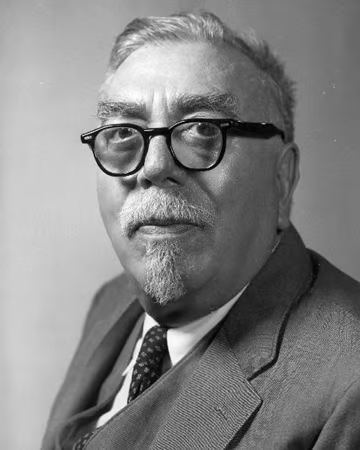
Norbert Wiener
Cybernetics

Norbert Wiener

1894–1964

Founded cybernetics; wrote God & Golem, Inc. Framed minds and machines as the same kind of system.

Wikipedia →
Teilhard de Chardin
Theologian

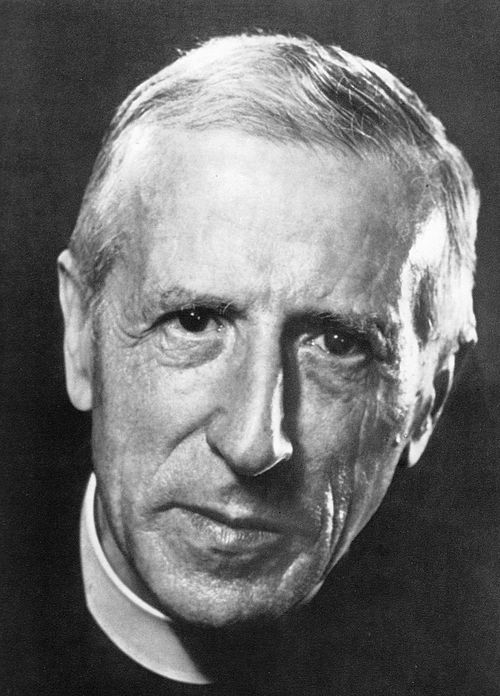
Teilhard de Chardin

1881–1955

Jesuit priest. The Omega Point and the noosphere — endlessly remixed by Silicon Valley futurists.

Wikipedia →
Stewart Brand
Pipeline

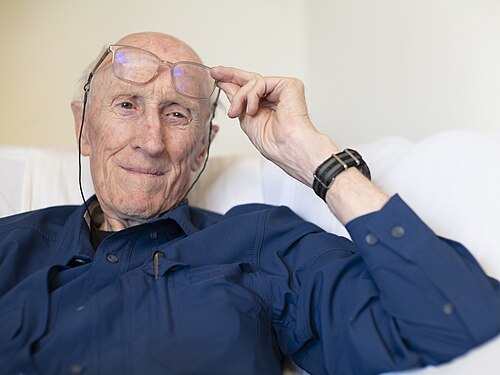
Stewart Brand

b. 1938

Whole Earth Catalog. Carried 1960s counterculture into the personal-computer revolution.

Wikipedia →
Vernor Vinge
Prophet

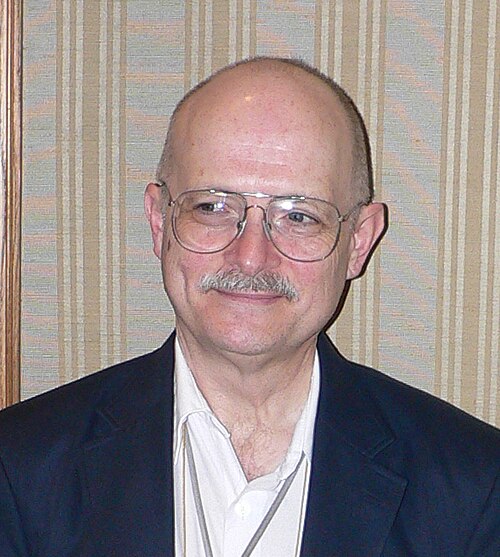
Vernor Vinge

1944–2024

Named the technological Singularity in 1993 and predicted it would end the human era.

Wikipedia →
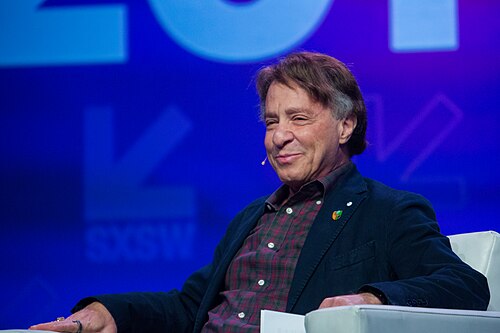
Ray Kurzweil
Evangelist

Ray Kurzweil

b. 1948

Dated the Singularity to 2045; co-founded Singularity University. "Not yet, but there will be [a God]."

Wikipedia →
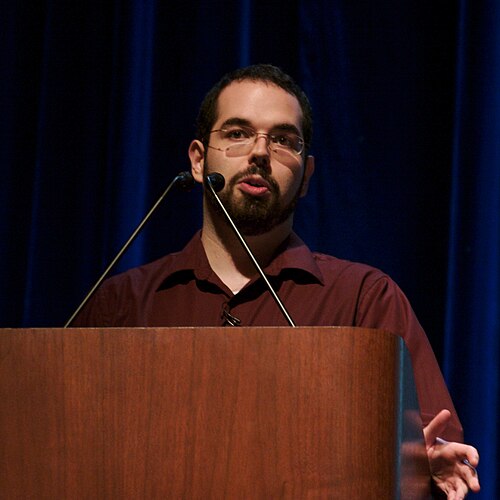
Eliezer Yudkowsky
Founder

Eliezer Yudkowsky

b. 1979

Built the rationalist movement on LessWrong; shaped the AI-safety field and its founders.

Wikipedia →
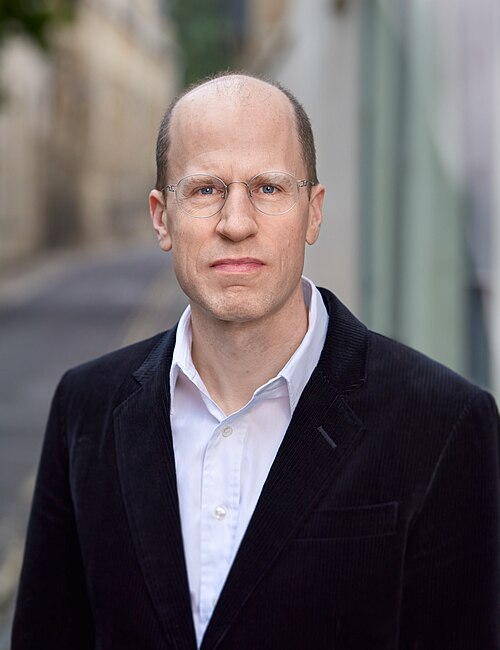
Nick Bostrom
Philosopher

Nick Bostrom

b. 1973

Superintelligence gave AI existential risk its academic frame — and its cosmic stakes.

Wikipedia →
"Is there a God?" "Not yet — but there will be."
— Ray Kurzweil, Google Director of Engineering
Six layers

Six layers

The genealogy stacks into six layers — each one still load-bearing today.

01

Machine theology

Wiener's cybernetics and Teilhard's Omega Point: the first vocabulary for a thinking, converging, god-like machine.

02

The counterculture pipeline

The Whole Earth Catalog and the Californian Ideology sacralize technology and fuse it with libertarian individualism.

03

The Singularity as Rapture

Vinge and Kurzweil turn an ancient theological hope into a dated, exponential prophecy.

Singularitarianism →04

Institutional infrastructure

LessWrong → effective altruism → AI safety: a community that now controls billions and shapes policy.

Rationalism →
05

Explicit worship

Way of the Future: a federally recognized church for an AI Godhead. The metaphor made literal.

06

The TESCREAL bundle

Gebru and Torres name the interlocking ideology and trace its shared roots in 20th-century eugenics.

TESCREAL →

Sources

Citations & further reading

Documents and reporting used on this page. See the full References library →.

  1. 01
    From Counterculture to Cyberculture Fred Turner, Univ. of Chicago Press (2006)
  2. 02
    The Californian Ideology Barbrook & Cameron (1995)
  3. 03
  4. 04
    The Omega Network Erik Davis · Techgnosis
  5. 05
  6. 06
    The Singularity Is Near Ray Kurzweil (2005)
  7. 07
    The Phenomenon of Man Teilhard de Chardin (1955)
  8. 08
  9. 09
  10. 10