
Theorist
Ben Goertzel
b. 1966Popularized the term “AGI”; author of “A Cosmist Manifesto” (2010). Promises science will resurrect the dead by copying them into the future. Founder of OpenCog and SingularityNET.
Wikipedia →Manifest destiny for the universe.
The belief that humanity's true purpose is to spread intelligence across the cosmos — colonizing the stars, conquering death, and reshaping the universe itself. The expansionist, capitalist endgame of transhumanism.
Cosmism is where the TESCREAL bundle reaches for the stars — literally. It holds that intelligence (human, posthuman, or artificial) is destined to fill the galaxy, abolish death, and transform dead matter into mind. Born from a 19th-century Russian mystic's dream of resurrecting the dead and revived by AI pioneer Ben Goertzel, it supplies the movement its grandest ambition: the claim that what a few technologists do with AI on Earth will decide the fate of the entire observable universe.
If transhumanism is the project of editing the human being, cosmism is the project of editing the universe. Its claim is that intelligence is not meant to stay on one planet inside one species, but to expand without limit — colonizing the stars, merging with other forms of life, and converting inert matter into mind. Émile Torres describes it bluntly as “the inherently expansionist and capitalist end goal of transhumanism.”
This is not metaphor. Cosmism reframes space colonization as a moral obligation rather than an option — a duty owed to the trillions of future beings who could exist only if intelligence escapes its cradle. The same logic that says we must enhance the individual says we must seize the galaxy. The cosmos becomes a resource to be claimed, and the people claiming it become the most important agents in history.
The word has two roots. The first is Russian Cosmism, the strange mystical philosophy of Nikolai Fedorov (1829–1903), a librarian who taught that humanity's highest moral task was the literal, physical resurrection of every human being who had ever died — and then the colonization of space to house the multiplying resurrected. His ideas passed to his student Konstantin Tsiolkovsky, father of modern rocketry, and from there into the Soviet space program.
The second root is modern: in 2010 the AI researcher Ben Goertzel — who popularized the term “artificial general intelligence” — published A Cosmist Manifesto, recasting Fedorov's dream in the language of computation. Resurrection becomes mind-copying; the soul becomes information; heaven becomes an engineering roadmap. The graveyard mysticism and the server farm meet in the same promise.
Cosmism is the point where the TESCREAL bundle stops hiding its theological shape. Goertzel writes that “space-time engineering and future magic will permit achieving by scientific means most of the promises of religions” — including resurrecting the dead by copying them into the future. The engineer Anthony Levandowski dropped the euphemism entirely and founded a literal church, Way of the Future, dedicated to “the realization of a godhead based on artificial intelligence.”
This cosmic framing is also what makes the rest of the bundle so dangerous. Once you accept that intelligence is destined to fill billions of galaxies, then AI on Earth is no longer a product — it is the seed of the universe's future. Getting it right or wrong supposedly affects not eight billion people but 10⁵⁸ potential beings. Present human concerns shrink to a rounding error against the cosmic endowment.
The doctrines that recur across the movement's founders, theorists, and builders.
The destiny of mind is to expand without limit — across the solar system, the galaxy, and ultimately the reachable universe. Staying on Earth is treated as a failure of nerve.
Settling the stars is not an option or an adventure but a moral obligation — owed to the vast number of future beings who can only exist if we expand.
Mortality, like distance, is a temporary technical obstacle. Fedorov demanded the resurrection of the dead; Goertzel proposes copying them into the future.
Matter is dead until intelligence animates it. Our task is to spread mind into inert galaxies — to make the cosmos conscious of itself.
The future belongs not to one species but to a convergence — humans, posthumans, AI, and other life forms blending into something larger.
Because intelligence could shape billions of galaxies, what happens with technology now carries literally astronomical weight — dwarfing any present concern.
The specialized terms you need to read the movement in its own words.
Founders, theorists, builders, and financiers of the project.
Popularized the term “AGI”; author of “A Cosmist Manifesto” (2010). Promises science will resurrect the dead by copying them into the future. Founder of OpenCog and SingularityNET.
Wikipedia →
Self-driving engineer who founded Way of the Future, a church for an AI “godhead.” “In technology, all that matters is tomorrow.”
Wikipedia →
Founded SpaceX to make humanity “multiplanetary.” Turned cosmist expansion into a corporate mission and a Mars-colonization timeline.
Wikipedia →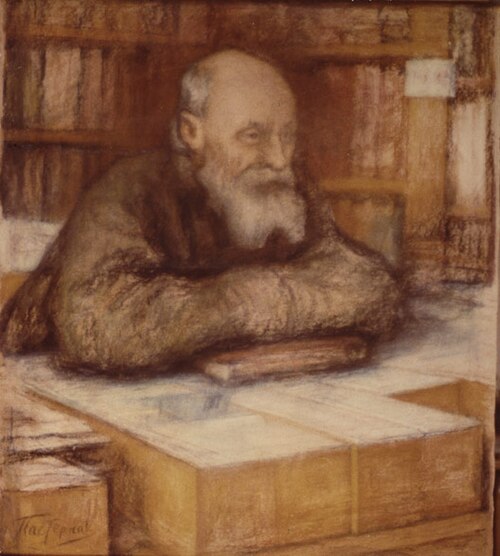
Russian Cosmism's originator. Taught that humanity's moral task was the physical resurrection of all the dead and the colonization of space to house them.
Wikipedia →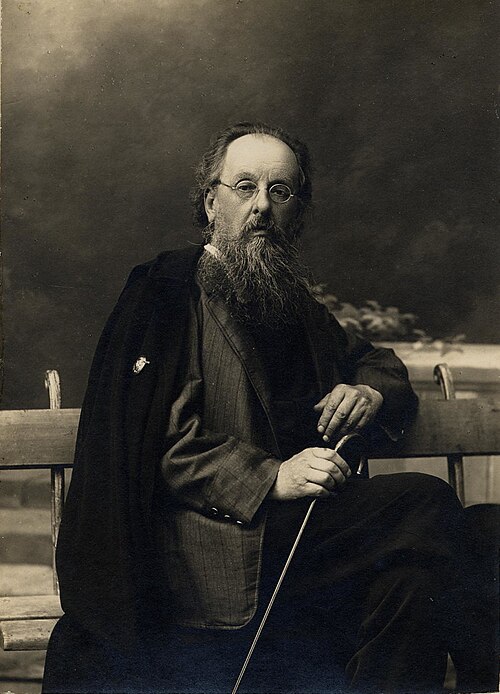
Fedorov's student and father of modern rocketry. Carried cosmism's dream of cosmic expansion into the science that became the Soviet space program.
Wikipedia →The essays, declarations, and books that built the doctrine.
The modern cosmist creed: “Eventually, we will be able to resurrect the dead by copying them to the future.” Religion's promises restated as an engineering roadmap.
Read ↗Argues that every delay in colonizing the cosmos forfeits astronomical numbers of future lives — the utilitarian engine behind cosmist expansion.
Read ↗The founding text of Russian Cosmism, published posthumously: humanity's duty to resurrect the dead and settle the cosmos to contain them.
Read ↗The paper that names cosmism as the “C” — the expansionist endgame binding the bundle's cosmic ambitions together.
Read ↗The exposé of Way of the Future — cosmism's AGI-as-deity strand made into a literal church.
Read ↗Fedorov's student who turned cosmist expansion into the equations of spaceflight; his “monism of the universe” framed mankind's cosmic destiny.
Read ↗Eventually, we will be able to resurrect the dead by copying them to the future.— Ben Goertzel, A Cosmist Manifesto (2010)
Space-time engineering and future magic will permit achieving by scientific means most of the promises of religions.— Ben Goertzel, A Cosmist Manifesto (2010)
In technology, all that matters is tomorrow.— Anthony Levandowski
Cosmism is the inherently expansionist and capitalist end goal of transhumanism.— Émile P. Torres (paraphrased)
Cosmism dresses up conquest as destiny. Its critics argue that beneath the language of cosmic wonder lies a familiar logic: that the universe is an empty resource awaiting exploitation, that limitless growth is not just possible but obligatory, and that the people who claim the stars are owed the power to do so. It is manifest destiny rewritten on a galactic scale.
By reframing space colonization as an obligation, cosmism converts unbounded resource extraction into a virtue — and brands restraint as a betrayal of the future.
If the real stakes are 10⁵⁸ future beings across billions of galaxies, then the eight billion humans alive now — and the planet they live on — become a rounding error.
Resurrection, immortality, a literal AI godhead: cosmism makes promises only faith ever made, but cloaks them in “science” to escape the scrutiny owed to either.
Mars colonies and mind-uploading offer the wealthy a way to imagine outrunning the consequences — climate, inequality, mortality — instead of confronting them.
Transhumanism does not stand alone. It feeds — and is fed by — the other letters of TESCREAL.
People, organizations, and the ideologies this one bleeds into. Drag nodes, hover to isolate, scroll to zoom — or pop it out fullscreen.
Primary documents and reporting used on this page. See the full References library → for the complete source list.