Founder
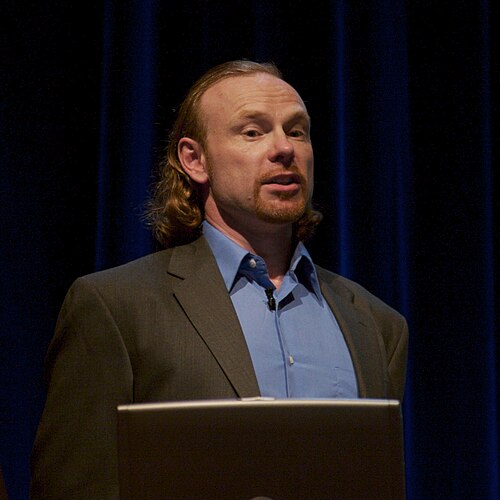
Max More
b. 1964Born Max O'Connor; changed his name to signal perpetual self-improvement. Founded the Extropy Institute (1988) and wrote The Principles of Extropy.
Wikipedia →Optimism as an engineering project.
The first organized transhumanist movement — a libertarian, super-optimistic crusade to reverse entropy through reason, technology, and the conquest of death. The second letter of TESCREAL and the social network where the whole bundle was incubated.
Extropianism took the loose philosophy of transhumanism and turned it into a community. Founded by Max More in the late 1980s, it preached "perpetual progress," radical life extension, cryonics, and a near-religious faith that intelligence could fight back the universe's slide into disorder. Its mailing list and conferences gathered a roster of future power players — Minsky, Kurzweil, Assange, Bostrom, Hanson, Yudkowsky, even Jeffrey Epstein. Critics argue this was the incubator where academic transhumanism fused with Silicon Valley libertarianism and seeded nearly every movement that followed.
The name is the whole thesis. Extropy was coined as the conceptual opposite of entropy — the physical law that everything tends toward disorder, decay, and death. Extropians proposed that intelligence and technology could push the other way: toward more order, more energy, more life, more capacity, without limit. Entropy was not destiny but an enemy to be defeated.
This reframed optimism as a duty rather than a mood. Where transhumanism made the abstract claim that humans should be improved, Extropianism supplied the attitude — a self-described "super-optimism" that treated aging, stupidity, scarcity, and death as solvable problems and treated despair as a kind of cowardice. It was transhumanism with a flag, a creed, and a clubhouse.
The British-born philosopher Max More (born Max O'Connor — he changed his name to signal his commitment to "always getting better") founded the Extropy Institute in 1988 with Tom Morrow, published the journal Extropy, and in 1990 wrote The Principles of Extropy: perpetual progress, self-transformation, practical optimism, intelligent technology, open society, self-direction, and rational thinking.
More also gave transhumanism its working definition — "the intellectual and cultural movement that affirms the possibility and desirability of fundamentally improving the human condition through applied reason." Extropianism was the first organized form of that movement: not a research program but a subculture, complete with a mailing list, conferences, and a libertarian political flavor that would prove enormously influential.
Extropianism matters less for its doctrines than for its guest list. The Extropians mailing list in the 1990s gathered AI pioneer Marvin Minsky, futurist Ray Kurzweil, a young Julian Assange, philosopher Nick Bostrom, economist Robin Hanson, a teenage Eliezer Yudkowsky — and the financier Jeffrey Epstein. It was, critics argue, the social network where academic transhumanism fused with Silicon Valley libertarianism.
From this milieu the rest of TESCREAL grew. Yudkowsky carried its memes into Singularitarianism and Rationalism; Bostrom into Longtermism; Hanson into the rationalist blogosphere. Émile P. Torres and Timnit Gebru argue Extropianism was the institutional bridge that carried the whole ideology — and, they contend, its eugenic assumptions — from a fringe newsletter into the boardrooms now building AI.
The doctrines that recur across the movement's founders, theorists, and builders.
The universe tends toward disorder and death; intelligence can and must push the other way. Reversing decay — biological and cosmic — is the project's organizing goal.
There is no natural ceiling on intelligence, lifespan, or capability. Improvement should be unbounded and continuous — "boundless expansion" in every dimension.
Individuals should actively remake themselves — body, mind, and character — through reason, technology, and discipline. Max More changing his own name was the principle in miniature.
Optimism is not a feeling but a method. Despair and fatalism are rejected as self-fulfilling; a "dynamic optimism" that acts to make good outcomes happen is treated as a duty.
Borrowing from libertarian and Hayekian thought, Extropians favored decentralized, self-organizing systems and free markets over central control — "open society" and "self-direction" over authority.
Mortality is an engineering failure, not a fact of life. Cryonics, life extension, and eventually uploading are the route out; accepting death is pathologized as "deathism."
The specialized terms you need to read the movement in its own words.
Founders, theorists, builders, and financiers of the project.
Born Max O'Connor; changed his name to signal perpetual self-improvement. Founded the Extropy Institute (1988) and wrote The Principles of Extropy.
Wikipedia →
Pen name of the co-founder of the Extropy Institute and Extropy magazine alongside Max More. A play on "tomorrow."
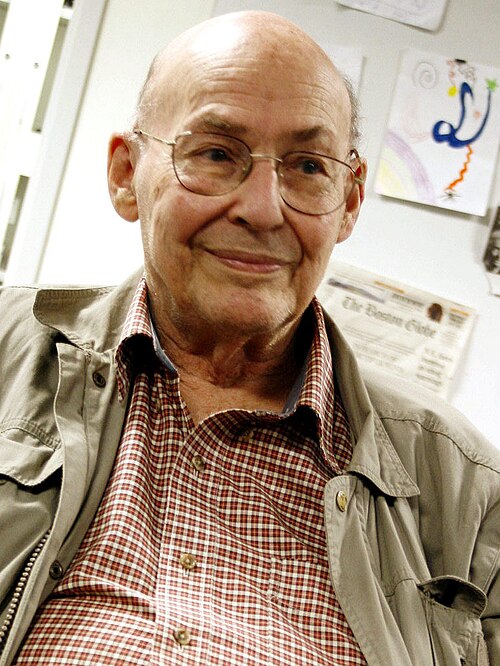
Turing Award-winning founder of MIT's AI Lab, drawn to the Extropian milieu. His "society of mind" framing fed the movement's faith in machine intelligence. Later named in connection to Epstein.
Wikipedia →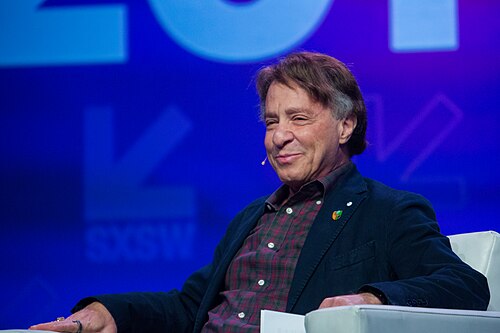
Popularized the technological singularity and longevity escape velocity. Reportedly dismissed ordinary human experience as "noise" against the coming machine intelligence.
Wikipedia →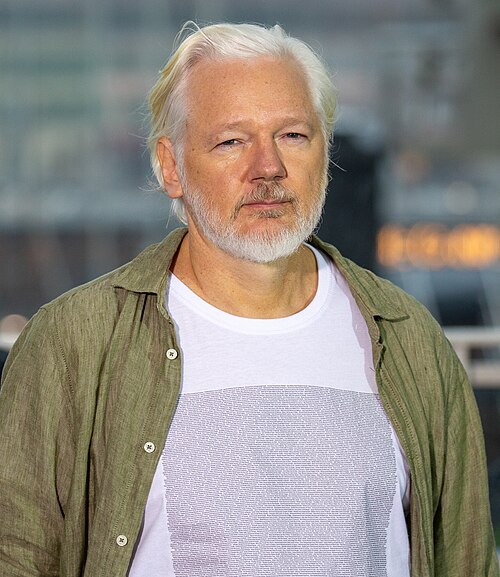
The future WikiLeaks founder was an early participant in the Extropian / cypherpunk crossover, years before his work on cryptography and leaks.
Wikipedia →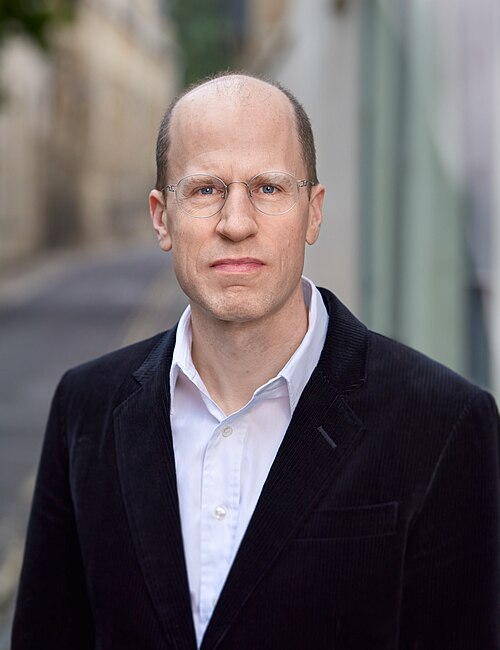
Active in the Extropian milieu before co-founding the WTA. Carried the project into academic longtermism. A leaked racist email later forced a public apology.
Wikipedia →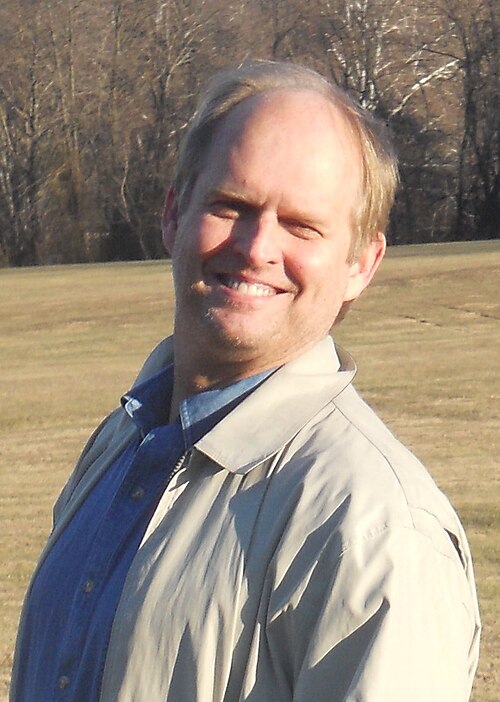
Economist and Extropian who co-founded the Overcoming Bias blog — a direct ancestor of the rationalist community — and theorized about uploaded "em" economies.
Wikipedia →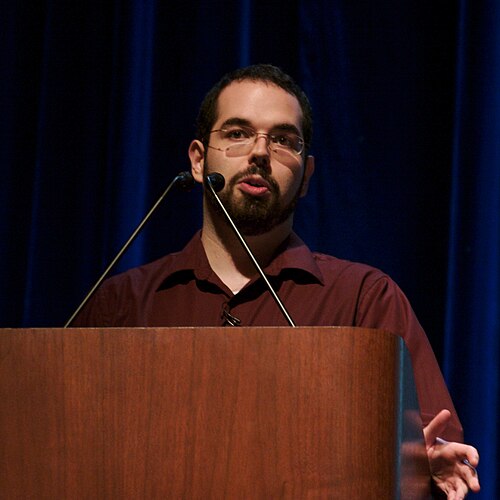
Entered the Extropian community as a teenager, predicting superintelligence by 2020. Carried its memes into Singularitarianism and founded what became MIRI.
Wikipedia →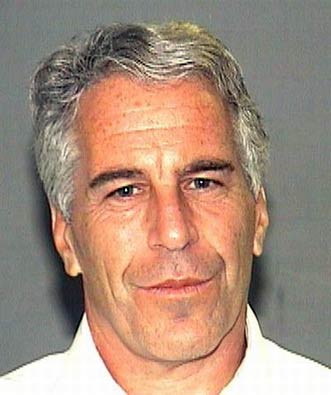
Transhumanist with eugenic aims — reportedly wanted to "seed the human race with his DNA" and arranged cryonic preservation. Funded figures across the milieu.
Wikipedia →The essays, declarations, and books that built the doctrine.
The movement's creed: perpetual progress, self-transformation, practical optimism, intelligent technology, open society, self-direction, rational thinking.
Read ↗More's essay reframing transhumanism as a coherent modern philosophy — the intellectual seed of organized Extropianism.
Read ↗The movement's magazine, where life extension, nanotech, cryonics, and libertarian futurism were debated. (Issue archived at the Internet Archive.)
Read ↗The mainstream profile that introduced the subculture's super-optimism, cryonics, and self-transformation to the tech world.
Read ↗Adjacent founding text that gave the early subculture the "transhuman" as a transitional being and shaped its self-image.
Read ↗The post-Extropian creed drafted as the movement professionalized — affirming enhancement, life extension, and morphological freedom.
Read ↗Extropy: the extent of a system's intelligence, information, order, vitality, and capacity for improvement.— Max More, The Principles of Extropy (paraphrased)
No more gods, no more faith, no more timid holding back. Let us blast out of our old forms, our ignorance, our weakness, and our mortality.— Max More, "Letter to Mother Nature" (paraphrased)
Perpetual progress. Self-transformation. Practical optimism. Intelligent technology. Open society. Self-direction. Rational thinking.— The seven Principles of Extropy
Extropianism is eugenics on steroids.— Émile P. Torres, on the broader transhumanist lineage (paraphrased)
Extropianism sold itself as joyful, can-do optimism — a love of progress and a refusal to accept death. Its critics argue it was also where transhumanism acquired its most consequential and most troubling features: a hard libertarian politics, a contempt for ordinary human limits, and a guest list that would go on to shape the AI industry in its own image.
Nearly every later TESCREAL movement traces members back to the Extropian list — Yudkowsky, Bostrom, Hanson. Critics argue its real legacy is not its ideas but the network it assembled and the assumptions it normalized.
"Spontaneous order" and "self-direction" imported a market-fundamentalist politics into transhumanism — the idea that the enhanced future should be governed by private wealth and weak states, not democratic control.
By pathologizing the acceptance of mortality and "biological fundamentalism," Extropians framed ordinary human values as disorders to be cured — a rhetorical move that recurs across the bundle.
As the first organized transhumanism, Extropianism carried forward the movement's founding premise that some human configurations are objectively superior. Epstein's presence in the milieu, Torres argues, was not an aberration but a symptom.
Transhumanism does not stand alone. It feeds — and is fed by — the other letters of TESCREAL.
People, organizations, and the ideologies this one bleeds into. Drag nodes, hover to isolate, scroll to zoom — or pop it out fullscreen.
Primary documents and reporting used on this page. See the full References library → for the complete source list.